
ΑΝΙΣΟΤΙΚΕΣ ΣΧΕΣΕΙΣ ΟΡΙΣΜΕΝΟΥ ΟΛΟΚΛΗΡΩΜΑΤΟΣ

Λύση
-
-
- Παρατηρούμε ότι:
![\[\displaystyle\int_1^3 \big(f^2(x) - 6f(x) + 9\big) ~dx =\]](https://study4maths.gr/wp-content/ql-cache/quicklatex.com-13cd21fba88f2fdb2ceebf1a781dc1cb_l3.png "Rendered by QuickLaTeX.com")
![\[\displaystyle\int_1^3 \big(f(x) - 3\big)^2 ~dx\]](https://study4maths.gr/wp-content/ql-cache/quicklatex.com-9802d39093cbc0deb7f514ee608a191c_l3.png "Rendered by QuickLaTeX.com")
Η συνάρτηση
 είναι συνεχής στο
 ![[1, 3]](https://study4maths.gr/wp-content/ql-cache/quicklatex.com-73573c029691aeae322f04957365e96f_l3.png "Rendered by QuickLaTeX.com") ως πραξεις συνεχών και ισχύει
ως πραξεις συνεχών και ισχύει ![\[g(x) = \big(f(x) - 3\big)^2 \geq 0.\]](https://study4maths.gr/wp-content/ql-cache/quicklatex.com-f1cd243c4e75f80fa66bd565fb87f829_l3.png "Rendered by QuickLaTeX.com")
Επίσης:
Από υπόθεση άρα η
άρα η  ΔΕΝ είναι ίση με το μηδέν σε όλο το
 ![[1, 3],](https://study4maths.gr/wp-content/ql-cache/quicklatex.com-761135b6f7f88d7abc436dfb640da0aa_l3.png "Rendered by QuickLaTeX.com") αφού:
αφού:![\[g(2) = \big(f(2) - 3\big)^2 = (1 - 3)^2=(-2)^{2} = 4 \neq 0\]](https://study4maths.gr/wp-content/ql-cache/quicklatex.com-6c50e2ab91b392f032e90afe60ccbca8_l3.png "Rendered by QuickLaTeX.com")
Επομένως από τη θεωρία
ΟΡΙΣΜΕΝΟ ΟΛΟΚΛΗΡΩΜΑ ΚΑΙ ΑΝΙΣΟΤΙΚΕΣ ΣΧΕΣΕΙΣ
ισχύει ότι:![\[\displaystyle\int_1^3 g(x) ~dx > 0 \Leftrightarrow\]](https://study4maths.gr/wp-content/ql-cache/quicklatex.com-b7532b25421081177ecdb3522b1f2510_l3.png "Rendered by QuickLaTeX.com")
![\[\displaystyle\int_1^3 \big(f^2(x) - 6f(x) + 9\big) ~dx > 0\]](https://study4maths.gr/wp-content/ql-cache/quicklatex.com-45cc1a55cc040588cfe7f762afce3df5_l3.png "Rendered by QuickLaTeX.com")
- Για να ισχύει:
![\[\displaystyle\int_1^3 f^2(x) ~dx > 4\displaystyle\int_1^3f(x) ~dx - 8.\]](https://study4maths.gr/wp-content/ql-cache/quicklatex.com-5ad7f5a627c23c19ba37987a9890847f_l3.png "Rendered by QuickLaTeX.com")
Αρκεί να αποδείξουμε ότι:
![\begin{align*} &\displaystyle\int_1^3 f^2(x) ~dx - 4\displaystyle\int_1^3 f(x) + 8 > 0 \Leftrightarrow\\\\ &\displaystyle\int_1^3 f^2(x) ~dx - 4\displaystyle\int_1^3 f(x) + \dfrac{8}{3-1}\cdot(3-1) > 0 \Leftrightarrow\\\\ &\displaystyle\int_1^3 f^2(x) ~dx - 4\displaystyle\int_1^3 f(x) + \dfrac{8}{3-1}\cdot\Bigg[x\Bigg]_{1}^{3} > 0 \Leftrightarrow\\\\ &\displaystyle\int_1^3 f^2(x) ~dx - 4\displaystyle\int_1^3 f(x) + \dfrac{8}{3-1}\cdot\int_{1}^{3}(x)' \,\, dx > 0 \Leftrightarrow \\\\ &\displaystyle\int_1^3 f^2(x) ~dx - 4\displaystyle\int_1^3 f(x) + \dfrac{8}{2}\cdot\int_{1}^{3}1 \,\, dx > 0 \Leftrightarrow\\\\ &\displaystyle\int_1^3 f^2(x) ~dx - 4\displaystyle\int_1^3 f(x) + 4\cdot\int_{1}^{3}1 \,\, dx > 0 \Leftrightarrow\\\\ & \int_1^3 f^2(x) ~dx - \dint_1^3 4f(x) ~dx + \displaystyle\int_1^3 4 ~dx > 0 \Leftrightarrow\\\\ & \displaystyle\int_1^3 \big(f^2(x) - 4f(x) + 4\big) ~dx \Leftrightarrow \\\\ &\displaystyle\int_1^3\big(f(x) - 2\big)^2 ~dx > 0 \end{align*}](https://study4maths.gr/wp-content/ql-cache/quicklatex.com-7fa50f74af070613f5a4d4ef40667261_l3.png "Rendered by QuickLaTeX.com")
Η παραπάνω ανισότητα από τη θεωρία
ΟΡΙΣΜΕΝΟ ΟΛΟΚΛΗΡΩΜΑ ΚΑΙ ΑΝΙΣΟΤΙΚΕΣ ΣΧΕΣΕΙΣισχύει, διότι:- η συνάρτηση
 είναι συνεχής στο
 - ισχύει ότι
![h(x) \geq 0, ~\forall x \in [1, 3]](https://study4maths.gr/wp-content/ql-cache/quicklatex.com-5c886ff618ba311c92455259db891106_l3.png "Rendered by QuickLaTeX.com")
- Από υπόθεση άρα η
 ΔΕΝ είναι ίση με το μηδέν σε όλο το αφού:
![\[h(2) = \big(f(2) - 2\big)^2 = (1 - 2)^2 = 1 \neq 0\]](https://study4maths.gr/wp-content/ql-cache/quicklatex.com-f2890aad9ab5b725de1b4a5b9e855b62_l3.png "Rendered by QuickLaTeX.com")
Σημείωση
Ισχύει ότι,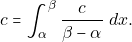
- η συνάρτηση
ΑΝΙΣΟΤΙΚΕΣ ΣΧΕΣΕΙΣ ΟΡΙΣΜΕΝΟΥ ΟΛΟΚΛΗΡΩΜΑΤΟΣ
- Παρατηρούμε ότι:
Βιβλιογραφία: Παπαδάκης εκδόσεις Σαββάλα.

Αυτή η εργασία χορηγείται με άδεια Creative Commons Αναφορά Δημιουργού – Μη Εμπορική Χρήση – Παρόμοια Διανομή 4.0 Διεθνές . -